

How Extrusax elevated aluminum extrusion performance with Abrasive Flow Machining (AFM)
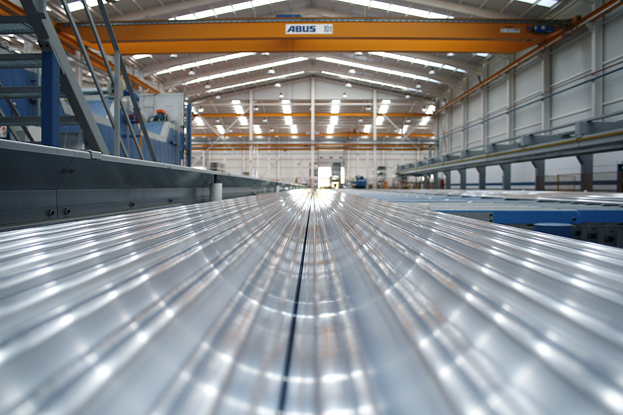
Extrusax is a specialized player in the aluminum extrusion industry, operating in highly demanding sectors such as aerospace, automotive, marine, and architecture. These markets require not only tight tolerances but also high-quality surface finishes and consistent performance across increasingly complex profile geometries.
As product designs evolved, Extrusax faced a growing challenge: traditional die preparation methods (particularly manual polishing) were no longer sufficient to meet rising expectations in terms of quality, repeatability, and productivity.
To address these limitations, Extrusax invested in an Extrude Hone machine based on Abrasive Flow Machining (AFM) technology. This strategic decision aimed to industrialize die finishing, improve process reliability, and unlock higher performance across the entire extrusion workflow.
What follows is a detailed return on experience, illustrating how this technological shift transformed both operational efficiency and product quality.
Rethinking die preparation in high-precision aluminum extrusion
At Extrusax, die preparation quickly emerged as a critical lever for performance.
“The first issue to consider is the die preparation which is crucial in our business. As we have to extrude profile with demanding and complicated shape it has been obvious that hand polishing was no longer the solution.”
This challenge is directly tied to the industries served, where innovation drives increasingly complex geometries and stricter quality requirements.
“Our main target was to fulfil the requirements of the aluminium extrusion sector and especially to guarantee the highest quality requirements from sectors like the aerospace, boat industry, automotive and architecture. These sectors are really creative and accordingly profile design is becoming more and more demanding.”
In this context, die preparation is no longer a secondary step—it is a determining factor in final product quality, extrusion stability, and overall profitability.
The breaking point of manual polishing
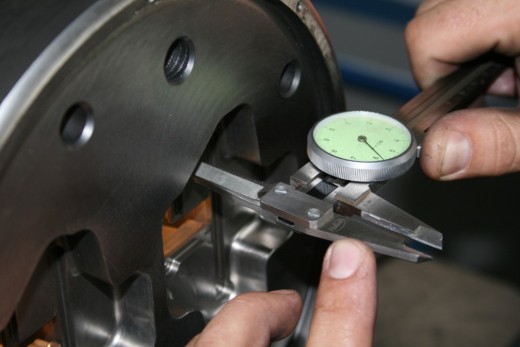
As complexity increased, the limitations of manual polishing became structural rather than occasional.
Some areas of modern dies simply cannot be reached by hand:
“It’s now common to have profile and consequently dies with some areas which are strictly unreachable by hand during the polishing phase. So Extrude Hone machine based on Abrasive Flow Machining process where the media loaded with abrasive is flowing through the die like the aluminium is the right solution.”
At the same time, production constraints made manual processes increasingly inefficient:
“…By saving time i mean two things: first using the EH machine, we can polish a die in 2 or 3 minutes instead of 10 minutes by hand. When you have to prepare 60 dies a day, it clearly makes a difference.”
But beyond time and accessibility, visual quality requirements—especially for anodized products—left no room for inconsistency:
“Upper range products are mostly anodized instead of painted so the customer is looking for a perfect visual aspect. That means no lines should be visible at the surface; if you put a complicated design with intricate areas on top, hand preparation is a no go. Inspections for such components usually take place using lights and magnification so you need a top quality die surface and profile surface or your product will be rejected by the customer.”
Why Extrusax chose Abrasive Flow Machining (AFM)
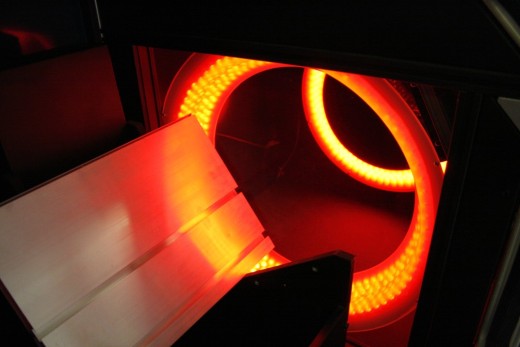
The adoption of AFM marked a fundamental shift: instead of manually treating surfaces, Extrusax moved to a process that replicates real extrusion conditions.
“Media loaded with abrasive is flowing through the die like the aluminium.”
This approach enables:
- full access to internal and complex geometries
- uniform material removal
- consistent surface finishing across the entire die
Most importantly, it introduces repeatability at an industrial scale:
“Consistency and homogeneity of the Extrude Hone machine automated polishing is the key which helps us to achieve the highest reliability.”

A step change in productivity and operational efficiency
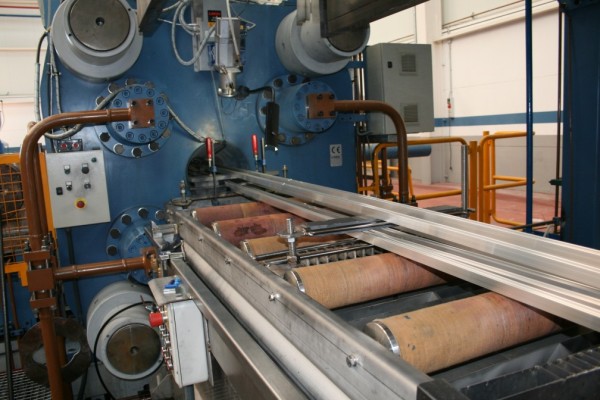
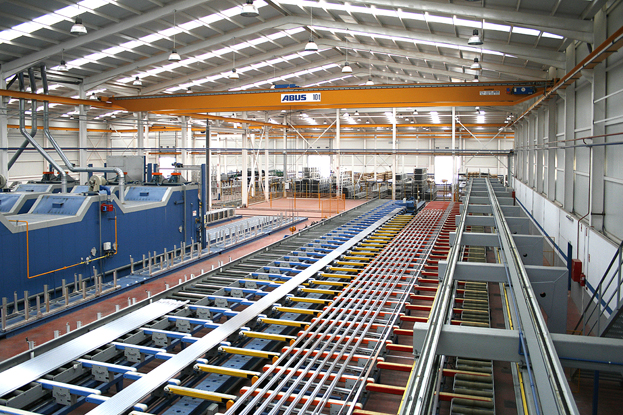
The most immediate impact was on cycle time and throughput.
“Well, we can talk about performance. We have to improve productivity to remain competitive on the market, so saving time is another need. By saving time i mean two things: first using the EH machine, we can polish a die in 2 or 3 minutes instead of 10 minutes by hand. When you have to prepare 60 dies a day, it clearly makes a difference.”
This gain goes beyond speed—it restructures the entire workflow:
- higher daily processing capacity
- reduced bottlenecks in die preparation
- improved resource allocation
At the same time, better-prepared dies reduce operational risks:
“With a well prepared die; with all surfaces smoothed equally, you have less chance to break it during extrusion, so this too saves time with limited breakdown on the press.”
Surface quality as a competitive advantage
In high-end aluminum applications, surface quality is non-negotiable.
AFM enables a level of finish that manual processes cannot reliably achieve:
“Achieve what hands can’t do and faster.”
This is particularly critical for anodized components, where surface defects are amplified during finishing:
“You need a top quality die surface and profile surface or your product will be rejected by the customer.”
The result is:
- improved aesthetic quality
- reduced rejection rates
- stronger alignment with premium market expectations
Extending die life and maximizing extrusion performance
One of the most strategic benefits lies in the mechanical behavior of the die during extrusion.
A uniformly polished die ensures balanced resistance:
“You see one thing that is really important when doing the extrusion of the aluminium through the die it’s how well the resistance is balanced. If the die is resisting the extrusion on a homogeneous manner that’s perfect, you will have great chance to reach an average of 40 to 50 extruded tons per die.”
Conversely, poor preparation leads to stress imbalances and early failure:
“If not the unbalanced stress becomes too high within the die during the extrusion and it can break. In that case, first you are losing money as you have to early replace a die and second you are losing as well time on your production line which is an additional loss of money.”
With AFM, Extrusax can reliably achieve expected performance levels:
“At least we guarantee the theoretical calculated extrusion volume.”
Standardizing quality across the entire die lifecycle
Extrusax has extended the use of AFM beyond new dies to include reconditioned ones, ensuring consistency over time.
“We polish each new die and all used ones too. Each time a die is returned to storage it is cleaned and polished.”
This systematic approach delivers:
- consistent performance across all dies
- optimized maintenance cycles
- reduced variability in production
Importantly, the process remains compatible with technical constraints such as tolerances:
“We have never had such tolerance issues because dies are hardened with nitriding, so the stock removal can only be really limited also because it’s only a 2 minutes polishing cycle. So definitely the die is more suffering from the extrusion itself.”
Conclusion — from process improvement to strategic advantage
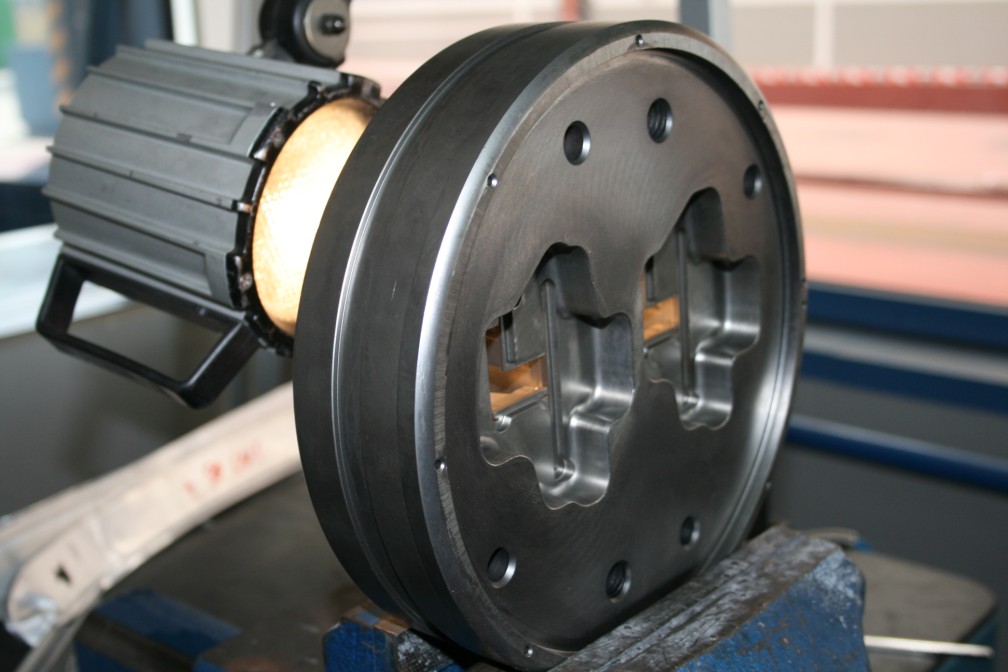
Extrusax’s experience demonstrates that adopting Abrasive Flow Machining is not just a technical upgrade—it is a structural transformation of extrusion performance.
By industrializing die preparation, the company has achieved:
- faster processing times
- superior and consistent surface quality
- extended die lifespan
- improved extrusion output (up to 40–50 tons per die)
- reduced operational risk and cost
Ultimately, the shift reflects a deeper reality of aluminum extrusion:
“The most important aspects of a part are its surfaces and edges.”
Ready to evaluate AFM for your extrusion process ?
If you are looking to:
- increase output per die
- eliminate surface defects
- reduce downtime and tool breakage
- standardize quality across your operations
Then it’s time to assess what Abrasive Flow Machining can deliver in your specific production environment.
Request a technical call to identify the potential gains for your aluminium extrusion process.