linkedin icon follow

Die casting finishing

Die casting is a high-productivity manufacturing process that accounts for nearly one-third of all metal castings produced worldwide. It is one of the most widely adopted manufacturing methods.

It produces complex, thin-walled components economically, with excellent dimensional accuracy, high mechanical strength, and a refined surface finish.

Die-cast components are used across a wide range of industries :

  • In automotive, the largest consumer of die-cast components, they help reduce vehicle weight without compromising functional requirements, from complex engine blocks and transmission housings to much simpler lock cylinders.
  • In electronics and telecommunications, die casting is widely used to manufacture enclosures that combine structural strength with effective thermal management.
  • In aerospace, the excellent strength-to-weight ratio of die-cast components makes them ideal for airframe components, avionics enclosures, and lightweight structural parts.
  • Finally, in industrial and automation applications, die castings equip pumps, motors and gearbox housings, as well as precision components for robotic systems.
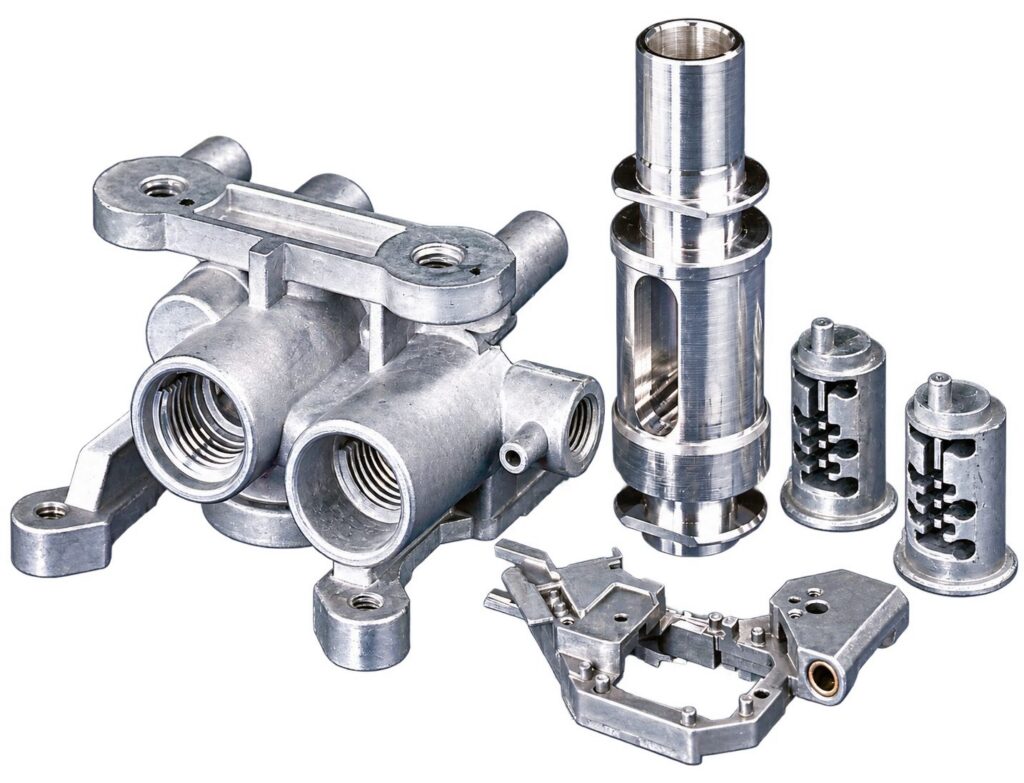
Die-cast aluminium components with complex internal passages
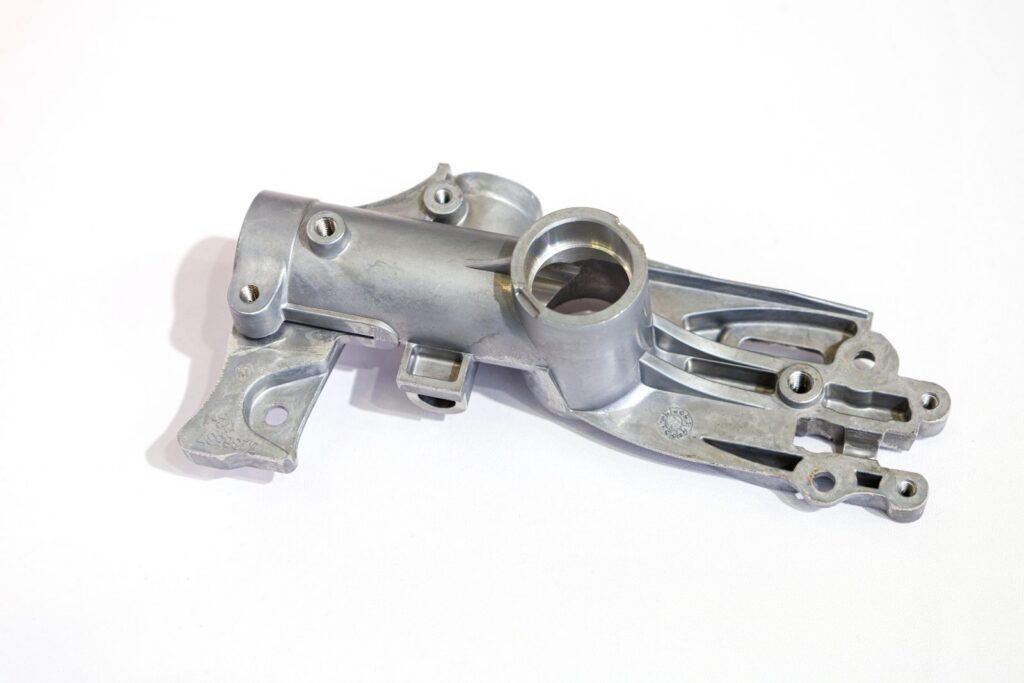
Die-cast aluminium housing before finishing

FINISHING DIE CAST COMPONENTS

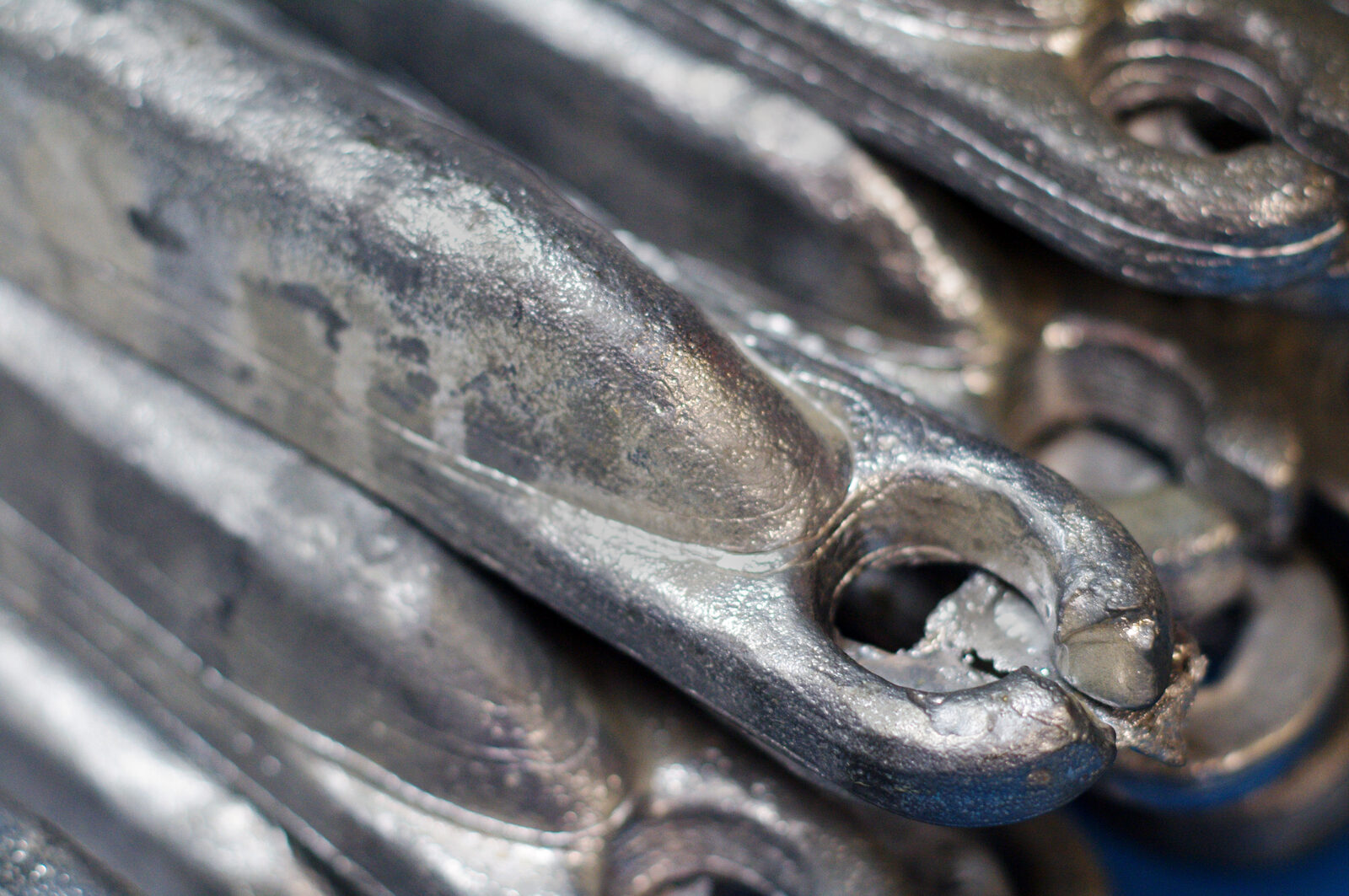
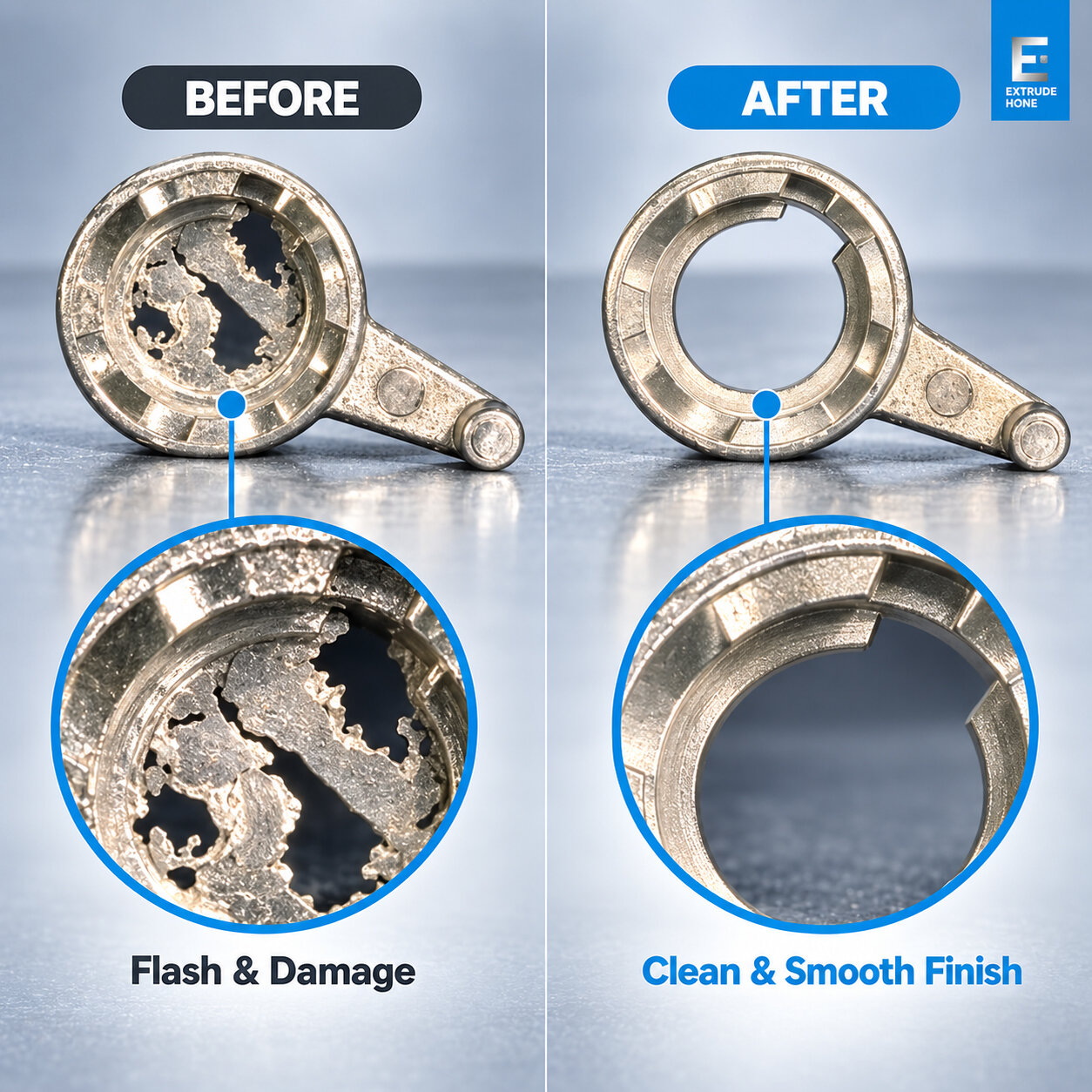
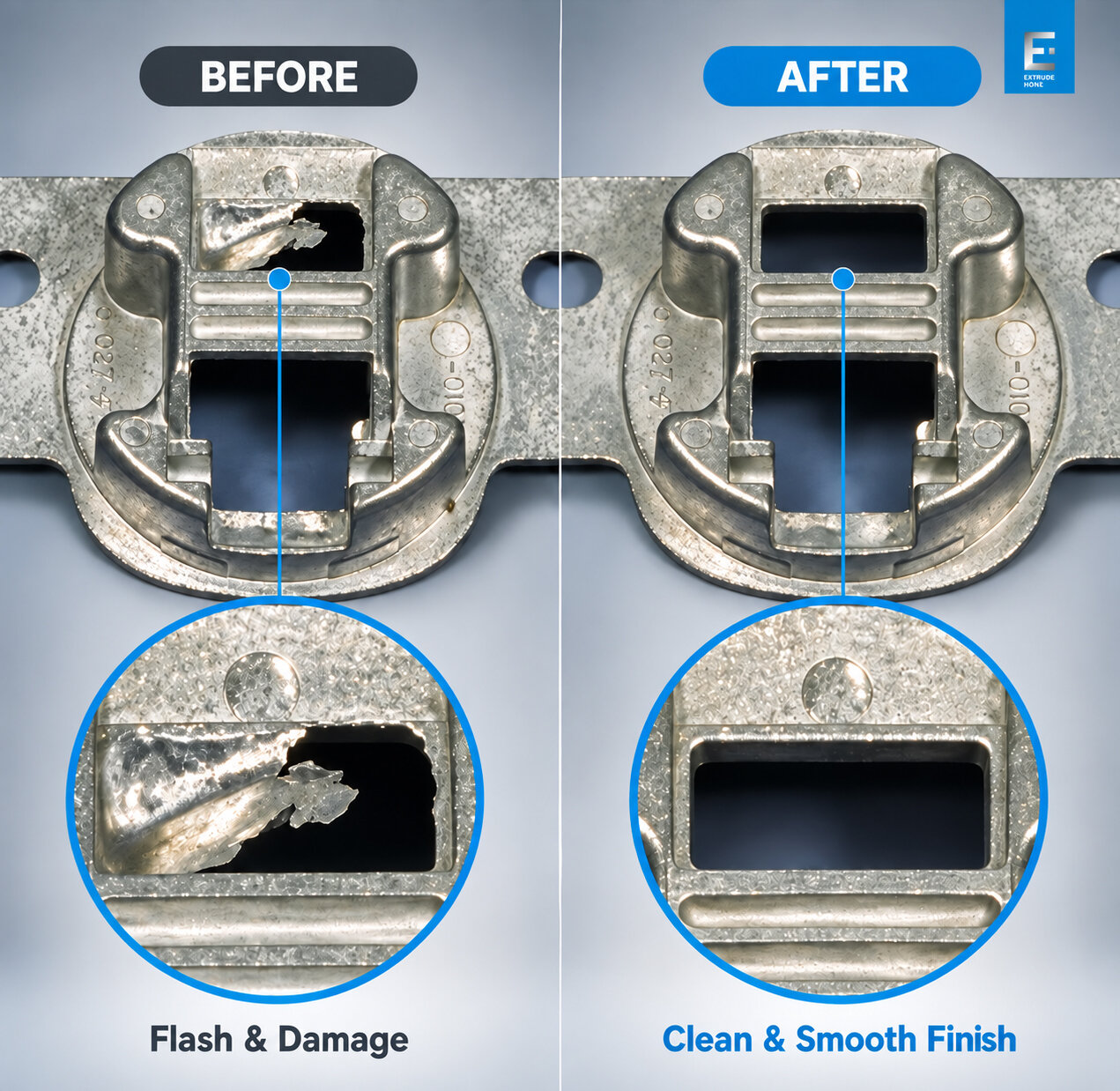
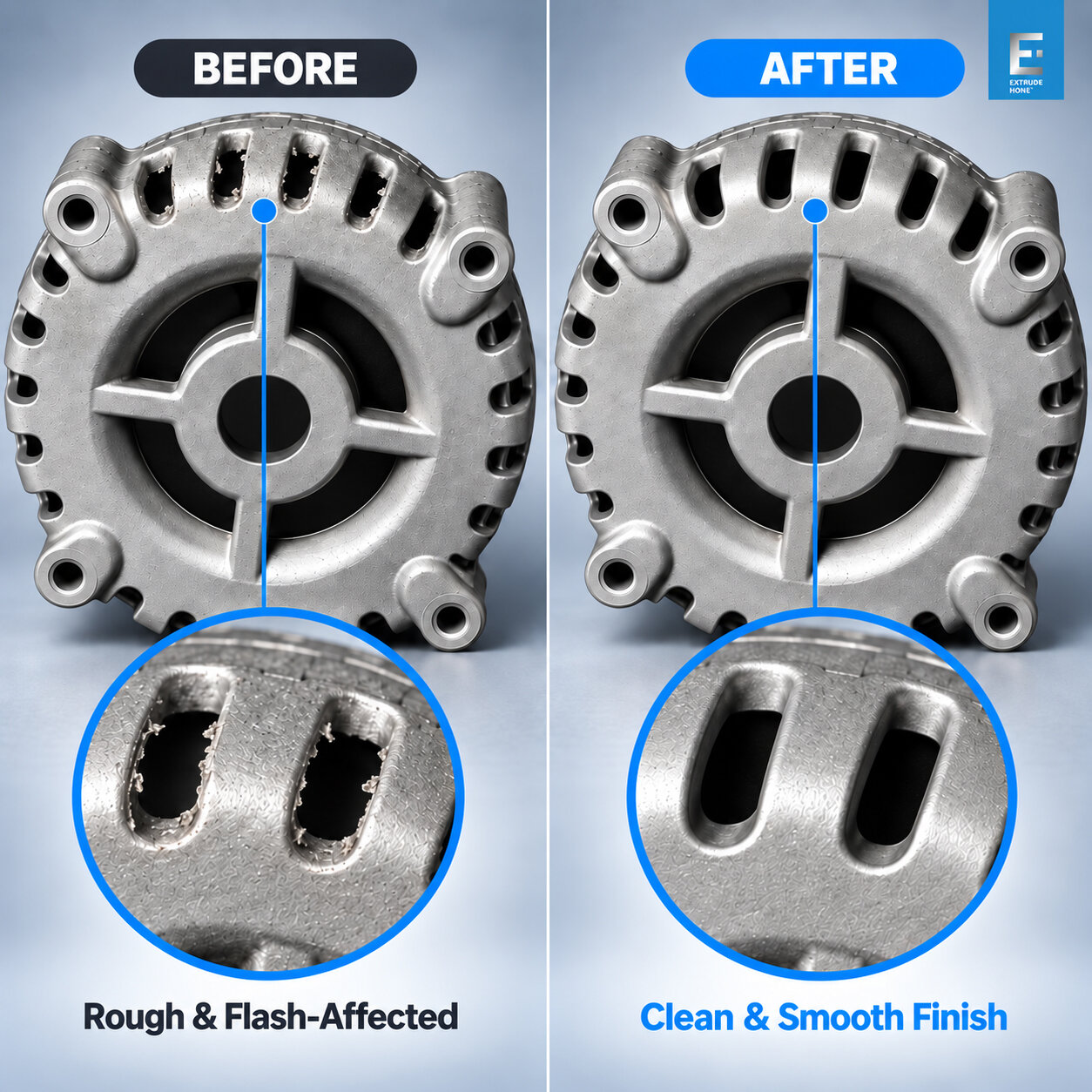
A common defect in die casting is flash: thin excess material that projects from the surface of the casting when molten metal escapes the mould cavity through small gaps or mating surfaces. This flash must be effectively removed before the components can be put into use.

This finishing step comes with requirements specific to die casting:

  • High throughput: the die casting process produces parts at a rapid pace, so deburring/de-flashing must be equally productive.
  • Complex geometries: many components include intricate internal passages that are difficult to reach mechanically.
  • Critical applications: the target industries (automotive, aerospace, industrial) demand a reliable, well-controlled finishing process.

WHEN CONVENTIONAL FINISHING PROCESSES REACH THEIR LIMITS

Conventional deburring/de-flashing processes remain widely used:

  • Manual polishing and buffing
  • Vibratory finishing
  • Shot blasting
  • Robotic finishing

Although widely used, these finishing methods have significant limitations:

  • Often labour-intensive
  • Time-consuming: they struggle to match the pace of the die casting process
  • Not very effective on complex internal geometries
  • Difficulty removing burrs and flash from inaccessible passages
  • Cannot guarantee a consistent outcome
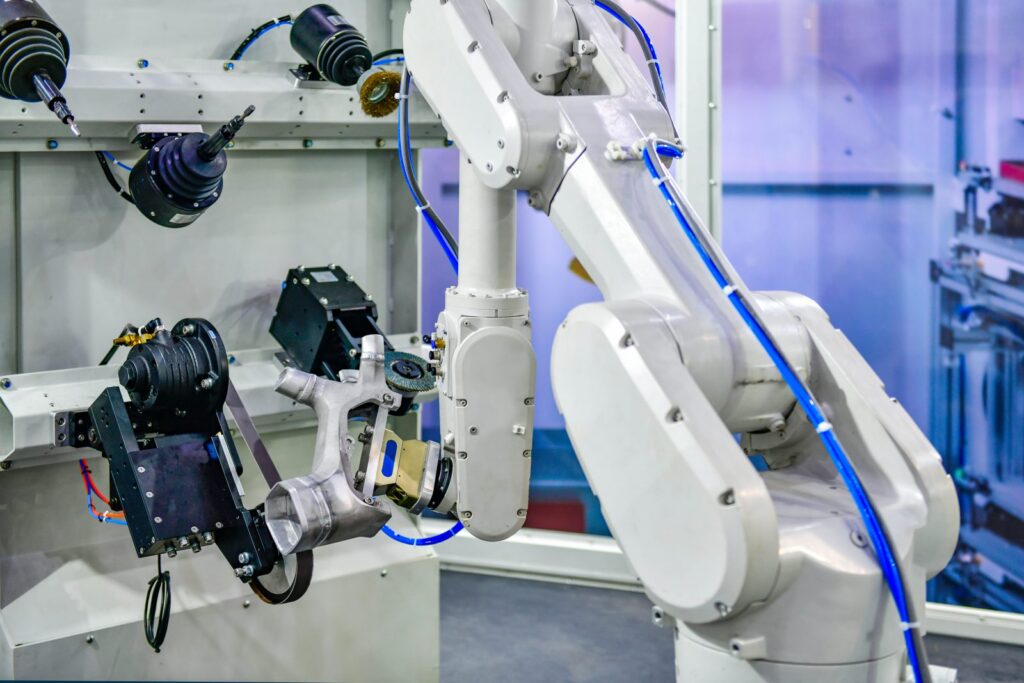
Robotic finishing cell deburring a die-cast part

EXTRUDE HONE'S TEM FINISHING PROCESS

The Thermal Energy Method (TEM) is an advanced, non-conventional deburring process. It rapidly removes burrs, flash, and contaminants from external and internal surfaces in a single operation, making it well-suited to high-volume die-casting applications : 

  • High throughput that matches die-casting production rates
  • Rapid, simultaneous removal of burrs, flash and contaminants on external and internal surfaces, including inaccessible passages
  • Consistent, repeatable results on complex geometries, regardless of volume processed
  • No adverse effect on surface finish, material properties or microstructure
  • Does not produce a controlled or measurable edge radius (TEM is not designed for edge radiusing)

WHY CHOOSE EXTRUDE HONE FOR DIE CASTING FINISHING?

With several decades of experience in advanced finishing, Extrude Hone understands the requirements specific to die casting, where deburring quality directly impacts component performance and reliability.

Our solutions deliver repeatable, controlled results on complex geometries that conventional methods cannot reliably handle.

Comparison between conventional methods and the thermal energy method (TEM)

CriteriaManual polishing / deburringVibratory finishingShot blastingRobotic finishingTEM
Processing rateLow: entirely dependent on the operator's paceModerate: batch processing, but long cyclesHigh on exposed surfaces, but limited to what the jet can reachModerate to low: batch processing, but long cyclesHigh: 30 to 60 seconds per cycle, several parts at once
Access to internal / complex areasLimited to areas visible and accessible to the toolEffective on external surfaces, poorly effective internallyLine-of-sight process: cannot reach hidden passagesEffective on external surfaces, hardly effective internally.Treats internal and external surfaces simultaneously, including inaccessible passages
Consistency of resultsVariable, dependent on operator skillAdequate on simple parts, uneven on complex geometriesGood on accessible areas onlyAdequate mostly for simple parts.Consistent and repeatable, regardless of volume processed
Labour requiredVery high, repeated part-by-part handlingModerate: loading, unloading and settingsModerate: process setup and controlIntensive settingsLow: automated process, reduced dependence on the operator
Effect on the materialRisk of local marking or material removalRisk of uncontrolled edge rounding from wear over timeCan alter surface finish and generate residual stressMinimum but dependent on tool wear or abrasive band wear.No adverse effect on the material, microstructure or surface finish, on aluminium, zinc and zamak

Full process automation removes operator dependency and eliminates variability, ensuring stable quality throughout production. This results in:

  • Consistent output at scale
  • Reduced reliance on manual expertise
  • Stable, repeatable quality over long production runs

Designed for industrial performance, our solutions achieve very short cycle times, often under one minute, while maintaining high stability from prototype to full-scale production.

OUR MACHINES FOR DIE CASTING FINISHING

To support these finishing requirements, Extrude Hone provides a range of industrial equipment designed to ensure full control, repeatability, and scalability of production.

Our T-Series (T250, T350, T450) thermal deburring machines offer a fast and reliable solution for removing all internal and external burrs simultaneously, in a single operation. These machines are designed for medium- to high-volume production and are available in multiple chamber sizes, with a maximum operating pressure of 24 bar and a cycle time of 30 to 60 seconds.

  • 100% deburring: consistent, repeatable treatment of hard-to-reach internal cross-holes and external contours
  • Precise gas metering via mass flow control, for perfectly controlled chamber pressure
  • Hydraulically secured closure: hermetically sealed deburring chamber, with no risk of contamination
  • User-friendly PLC / HMI control that is easy to expand, with integrated fault diagnostics
  • Integrated noise suppression that protects the production environment and operator safety
  • Enhanced productivity through optional integration of a post-washing stage

Contract shop opportunity: accessing top finishing technologies

For manufacturers who prefer not to invest directly, Extrude Hone also provides contract shop services worldwide.

Benefit from trial and contract capabilities, extensive experience and expert support to ensure quick turnaround and uncompromised quality.

At Extrude Hone, we are committed to providing an unparalleled experience. We use our knowledge to help your projects. We work hard to ensure the best solutions.

Our goal is to enhance efficiency and make your parts flawless.

CASE STUDIES

Learn more about our TEM and die casting finishing experience

HYDRAULIC MANIFOLD DEBURRING

Machine reliability depends heavily on hydraulic system performance.

3 NEW TEM MACHINES

These machines deburr valve bodies and manifold parts, which are integrated into Hengli hydraulic systems.

REICH USES THERMAL DEBURRING

Reich’s expertise responds to customer requests in a timely and professional manner.

FAQ ABOUT DIE CASTING FINISHING

TEM is compatible with the materials most commonly used in die casting, including aluminum, zinc, and Zamak.

Because the process relies on a controlled thermal reaction rather than mechanical contact, it can be tuned to each material’s characteristics, ensuring effective deburring and de-flashing while keeping the finished part fully intact. This makes it suitable across a wide range of die-cast components used in automotive, electronics, aerospace, and industrial applications.

TEM has no adverse effect on material properties, microstructure, or surface finish. Because burrs and flash have very little mass compared to the component itself, they are removed by the thermal reaction before the heat can affect the base material.

The result is a cleaned part with its original dimensions, strength, and surface characteristics fully preserved, which is essential for parts destined for critical applications.

Unlike line-of-sight methods such as shot blasting, which can only treat surfaces the media can physically reach, TEM treats internal and external surfaces simultaneously in a single operation.

This makes it particularly effective on die-cast components with intricate internal passages, cross-holes, or hidden cavities- areas where conventional methods struggle or fail to remove burrs and flash.

With cycle times of 30 to 60 seconds and the ability to process several parts per batch, TEM is designed to match the rapid pace of die casting production. This throughput, combined with the consistency of an automated process, allows manufacturers to keep deburring from becoming a bottleneck as production volumes scale up.

Beyond capital equipment such as the T-Series machines, Extrude Hone also offers contract shop services worldwide.

This gives manufacturers access to trial and contract capabilities without an upfront investment, making it possible to validate the TEM process on prototype or low-volume batches before deciding to bring the equipment in-house for full-scale production.

EXTRUDE HONE SOLUTIONS

AFM Machines

Find our best AFM machines

Extrude Hone Tools

Tooling for each Technology

ECM Machines

Find our best ECM machines

Contract Shops

Extrude Hone’s network of Contract Shops

TEM Machines

Find our best TEM machines

Services Center

Engineering, Aftermarket and more…

EXTRUDE HONE NEAR ME